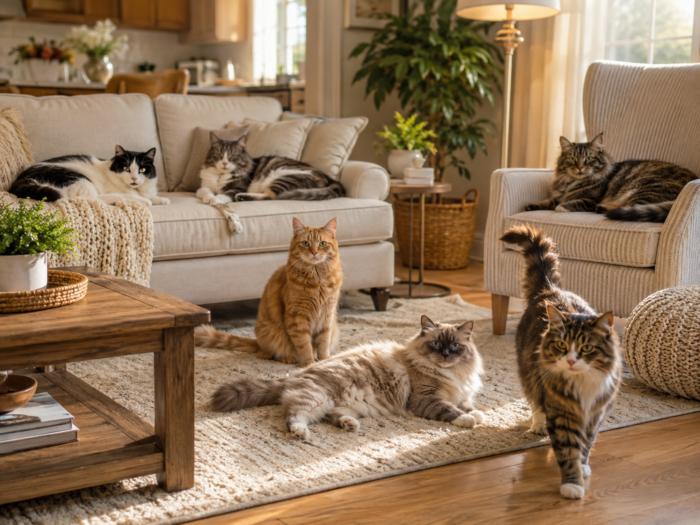
Sofas, carpets, curtains, and mattresses are common targets for scratching. Owners may believe that a cat is being destructive on purpose, but scratching is a normal and necessary behavior. The most effective solution is not to stop scratching completely, but to provide a better and more appropriate place for it.
Cats scratch partly to maintain healthy claws. The outer layers of a cat’s claws naturally wear out and are removed through contact with rough surfaces. Small, curved pieces found near a scratching post are usually normal outer claw layers rather than entire claws.
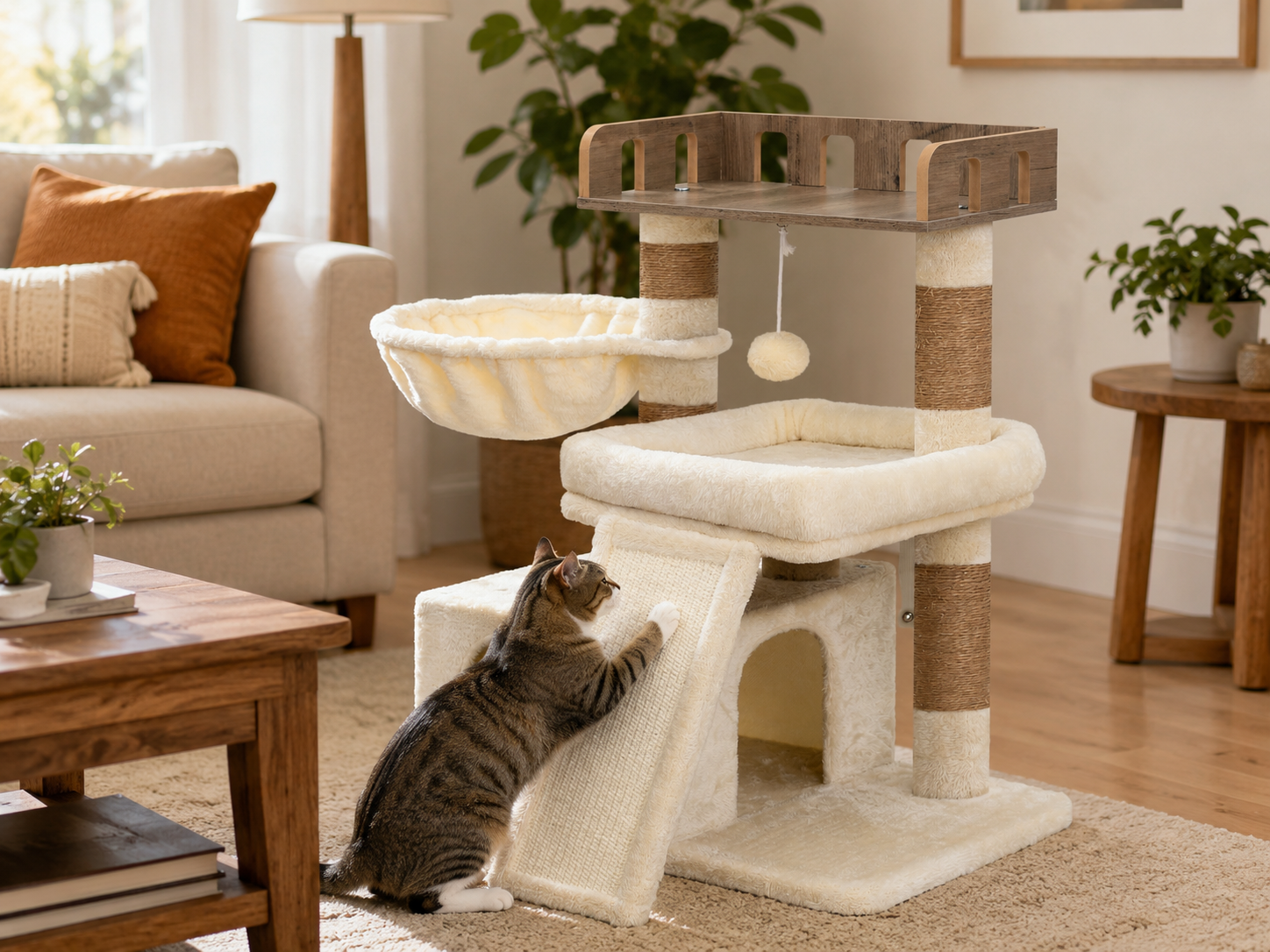
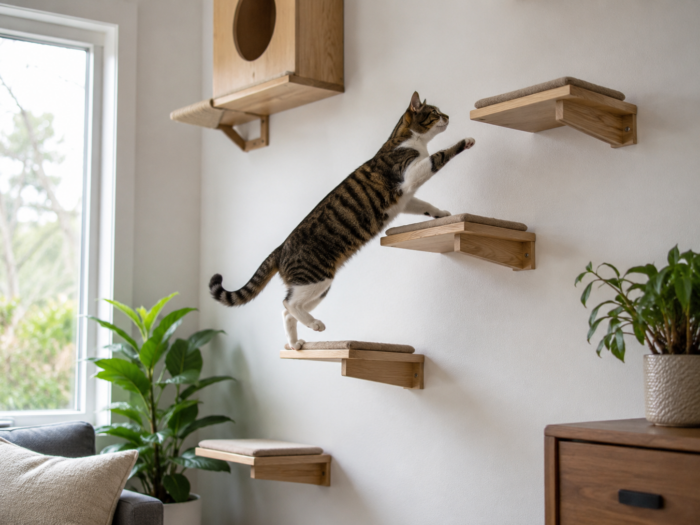
Scratching also helps cats stretch their muscles. When a cat reaches upward and scratches a vertical object, it extends its front legs, shoulders, back, and body. A scratching post that is too short or unstable may not allow a full and comfortable stretch.
Another important purpose of scratching is territorial communication. Cats have scent glands around their paws. Scratching leaves both scent and visible marks, helping the cat identify familiar and secure areas. This is why cats often scratch near doorways, sofa arms, hallways, sleeping areas, and frequently used pathways.
To redirect the behavior, owners should first observe how the cat scratches. A cat that scratches upright furniture may prefer a tall vertical post. A cat that scratches carpets may prefer a horizontal board. A cat that scratches angled furniture may respond well to an inclined scratching ramp.
Placement is just as important as material. A scratching post hidden in an unused corner may be ignored. It is usually more effective to place it next to the furniture the cat already scratches, near a sleeping area, or along a regular walking route.
When the cat uses the scratching post, it should be rewarded immediately with praise, petting, or a small treat. Toys can also be used to attract the cat to the new surface. Owners should avoid forcing the cat’s paws against the material, as this may create fear or resistance.
Furniture covers, protective film, and temporary barriers can help protect household items during training. However, punishment and frightening methods should be avoided. With observation, suitable scratching furniture, and consistent positive reinforcement, cats can learn to use appropriate surfaces while continuing to meet their natural physical and emotional needs.
rganizes industry exchange activities, such as technical seminars and product exhibitions, providing a communication and cooperation platform for enterprises within the industry, promoting the sharing of technologies and experiences among enterprises, and thus driving the sustainable development of the entire industry.