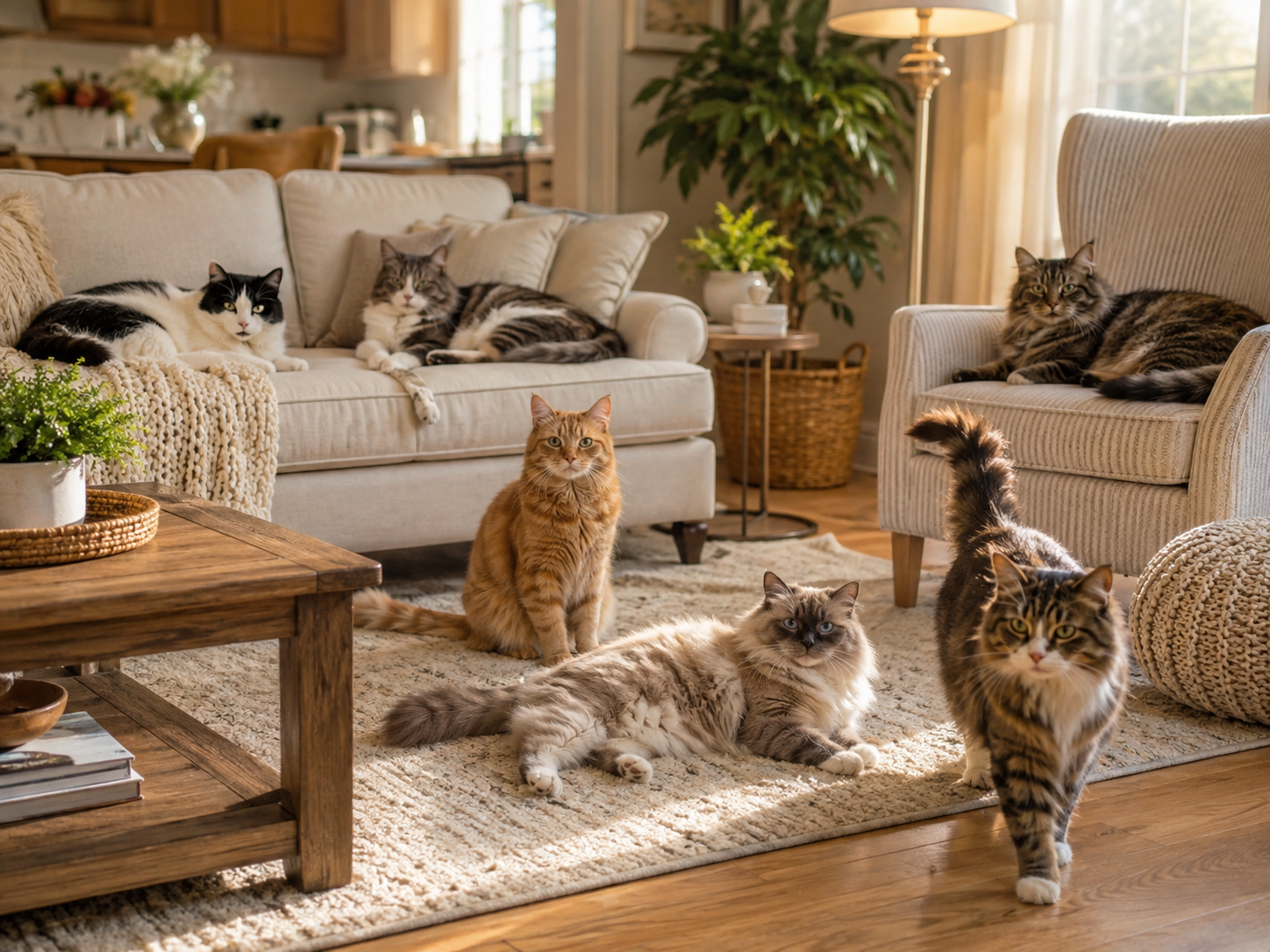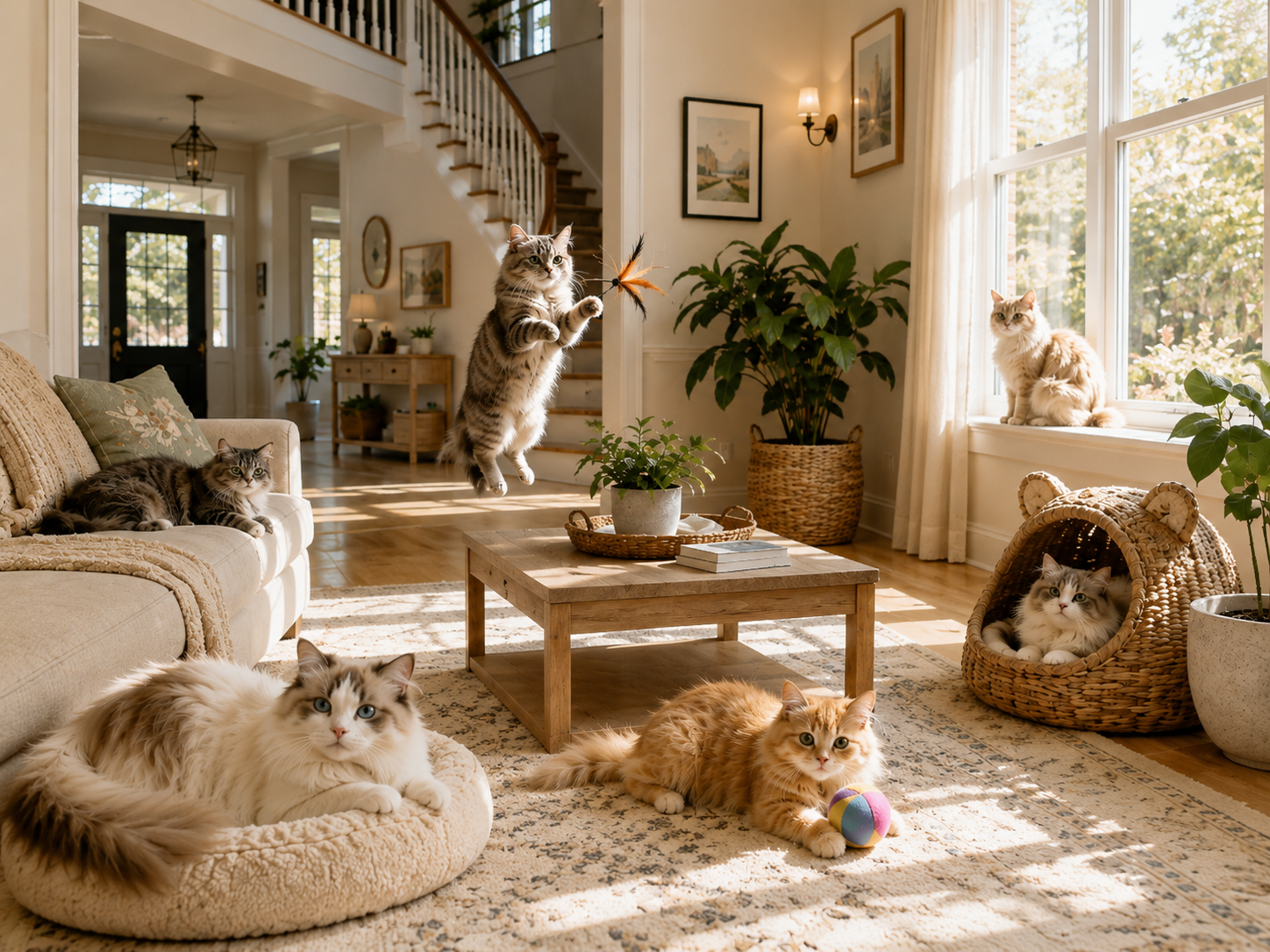
As more households care for two or more cats, space management has become an important part of responsible cat ownership. A lack of obvious fighting does not always mean that every cat feels comfortable.
Stress between cats can appear in subtle ways. One cat may block a hallway, guard a litter box, take control of a high platform, stare at another cat, interrupt feeding, or repeatedly chase a quieter cat. These behaviors may indicate limited resources or poorly organized space.
Cats are territorial animals with individual preferences. Even cats that live peacefully together may not want to share every bowl, bed, litter box, scratching surface, or resting platform.
Multi-cat households should provide several feeding and drinking locations. Food bowls should be separated enough to allow each cat to eat without feeling watched or threatened. Water bowls can be placed in different rooms to encourage drinking and reduce competition.
Litter boxes are especially important. A commonly used guideline is one litter box per cat, plus one additional box. Two cats may therefore benefit from three boxes. These boxes should be distributed around the home rather than placed side by side in one location.
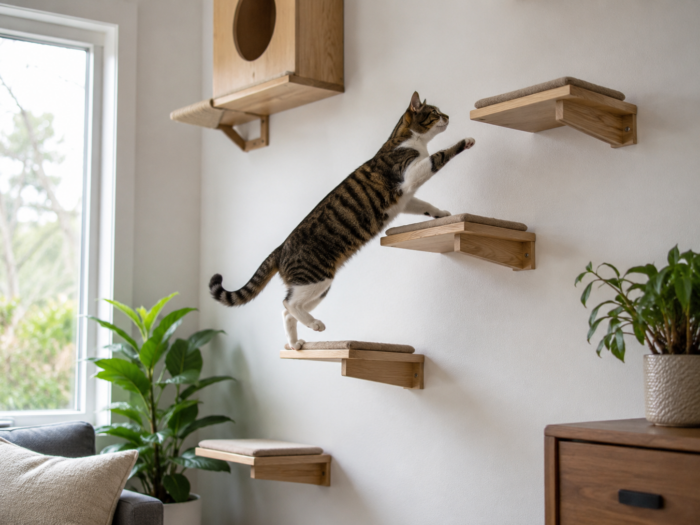
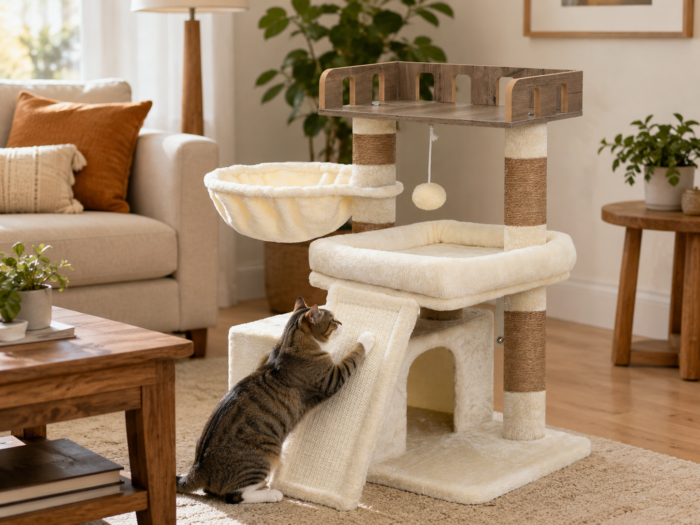
Vertical space can greatly increase the usable territory of a room. Multi-level cat trees, wall shelves, window platforms, and elevated resting areas allow cats to remain in the same room while maintaining distance. Cat trees with several climbing and exit routes are especially useful because one cat cannot easily block the only pathway.
Resting areas should include both open and enclosed options. Some cats prefer high observation points, while others feel safer inside a covered cat house or quiet corner. Each cat should have access to at least one comfortable area where it is unlikely to be disturbed.
Owners should watch for subtle changes in behavior. A cat that begins hiding, eating less, avoiding certain rooms, or changing its litter box habits may be experiencing social stress.
The goal of a multi-cat home is not to force every cat to eat, sleep, and play together. The goal is to give each cat choices. Cats should be free to approach one another when they feel comfortable and create distance when they need it. Thoughtful resource placement and well-designed vertical territory can support a calmer and more balanced household.