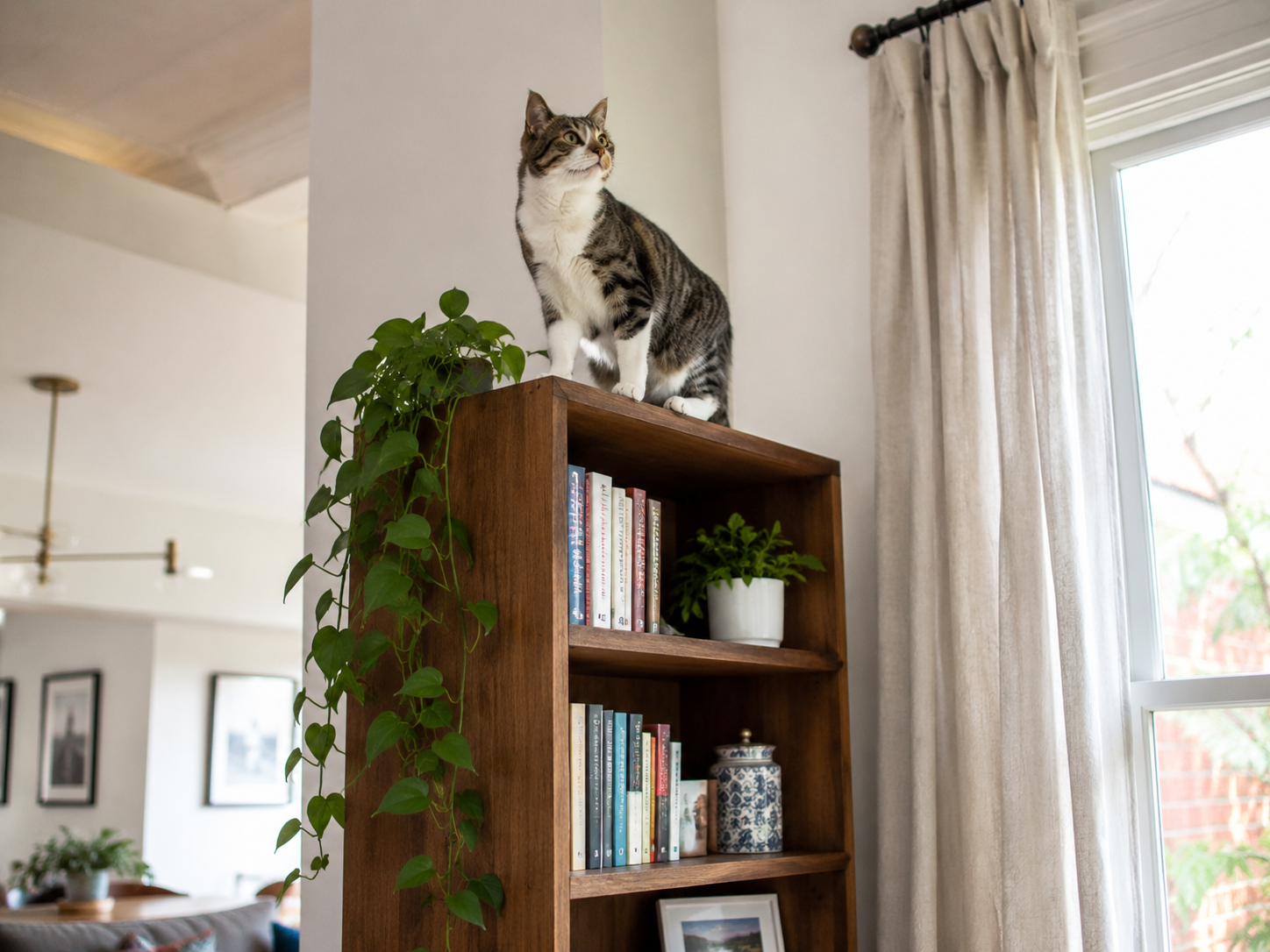
Cats are often found on bookshelves, windowsills, cabinets, refrigerators, and the highest platforms of cat trees. Even when a soft bed is available on the floor, many cats still prefer an elevated resting place. This behavior is closely connected to their instincts, sense of security, and natural way of using space.
In nature, a high position gives cats a better view of their surroundings. Cats are hunters, but they are also alert animals that instinctively watch for possible threats. From an elevated location, a cat can observe people, other pets, movement, sounds, and changes in the environment.
High places can also provide a quiet and private resting area. Floor-level spaces are often busy with foot traffic, children, cleaning equipment, or other animals. A stable elevated platform allows a cat to stay away from these disturbances while still remaining connected to household activity.
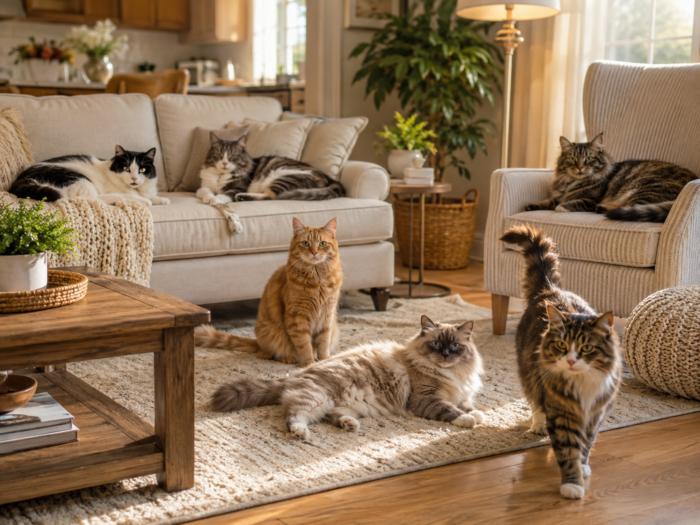
Vertical territory is especially valuable in multi-cat homes. Cats may compete for resting areas, pathways, and other resources. When every important area is located on the floor, cats are more likely to block one another, chase each other, or fight over preferred locations.
Adding platforms at different heights can divide one room into several usable levels. Cats can share the same room while maintaining comfortable distances from each other. This can reduce tension and give each cat more control over its surroundings.
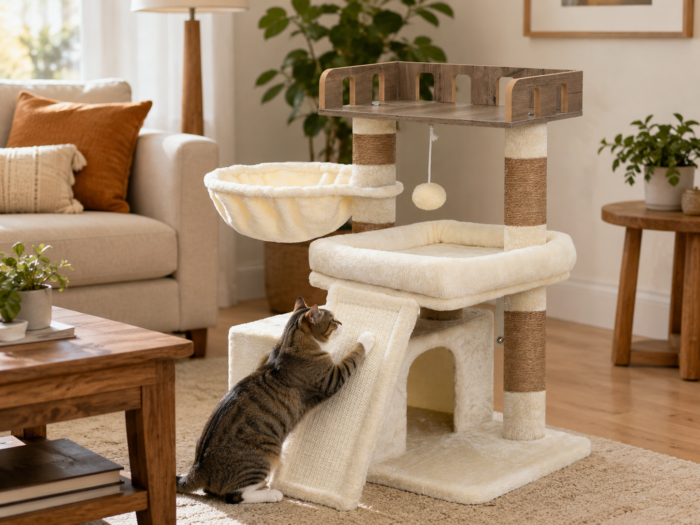
Owners can create vertical space with cat trees, wall-mounted shelves, window perches, and stable furniture. A cat tree is often most effective when placed in a living room, near a window, or in an area where family members spend time. This allows the cat to observe daily activity without feeling isolated.
The top platform should be wide enough for the cat to lie down, turn around, and stretch comfortably. Large cats and multi-cat households need especially strong structures, wide resting surfaces, thick support posts, and stable bases.
Tall cat furniture should always be placed on a flat surface and secured with an anti-tip device when recommended. Unstable cabinets and slippery household objects should not be used as permanent climbing areas. Window screens and locks should also be checked carefully.
Providing vertical space is not simply about adding another pet product to the home. It is a way of respecting a cat’s natural behavior. A secure and well-designed climbing environment can improve confidence, reduce stress, and support peaceful relationships in multi-cat households.