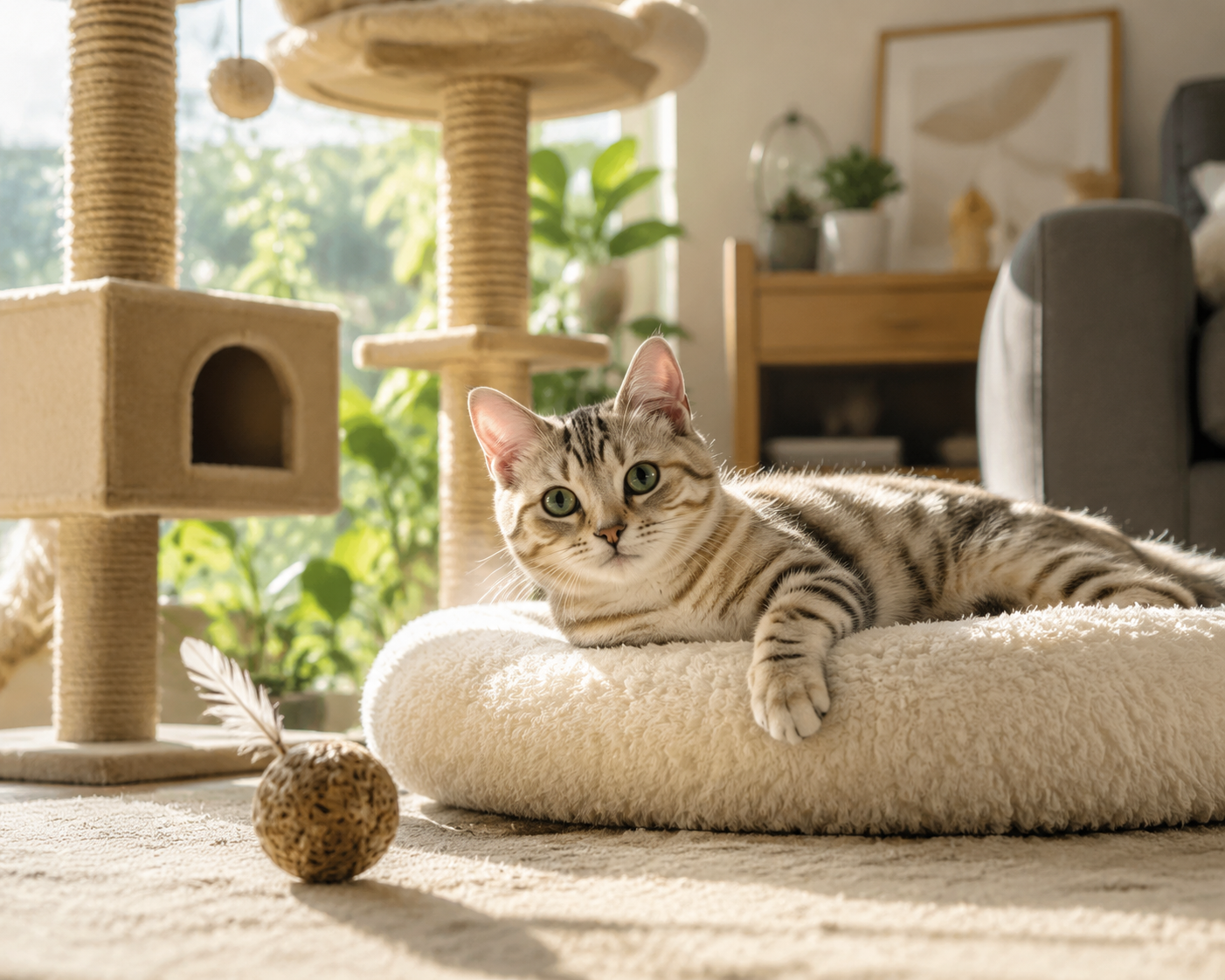
Many people assume that cats do not need regular exercise because they do not require daily walks like dogs. Providing food, water, a litter box, and a comfortable sleeping area may meet a cat’s basic needs, but these essentials are not enough to support a healthy and engaging indoor lifestyle.
Indoor cats still need physical activity, mental stimulation, and opportunities to express their natural behaviors. A cat that spends most of the day eating and sleeping without climbing, chasing, scratching, or exploring may gradually gain weight and lose muscle strength. Limited activity can also lead to boredom, frustration, and behavioral changes.
Some cats release unused energy by running through the home at night, scratching furniture, biting household objects, or meowing excessively. Other cats may become unusually quiet and show less interest in toys or their surroundings. These behaviors are not always signs of disobedience. They may indicate that the cat’s environment does not provide enough stimulation.
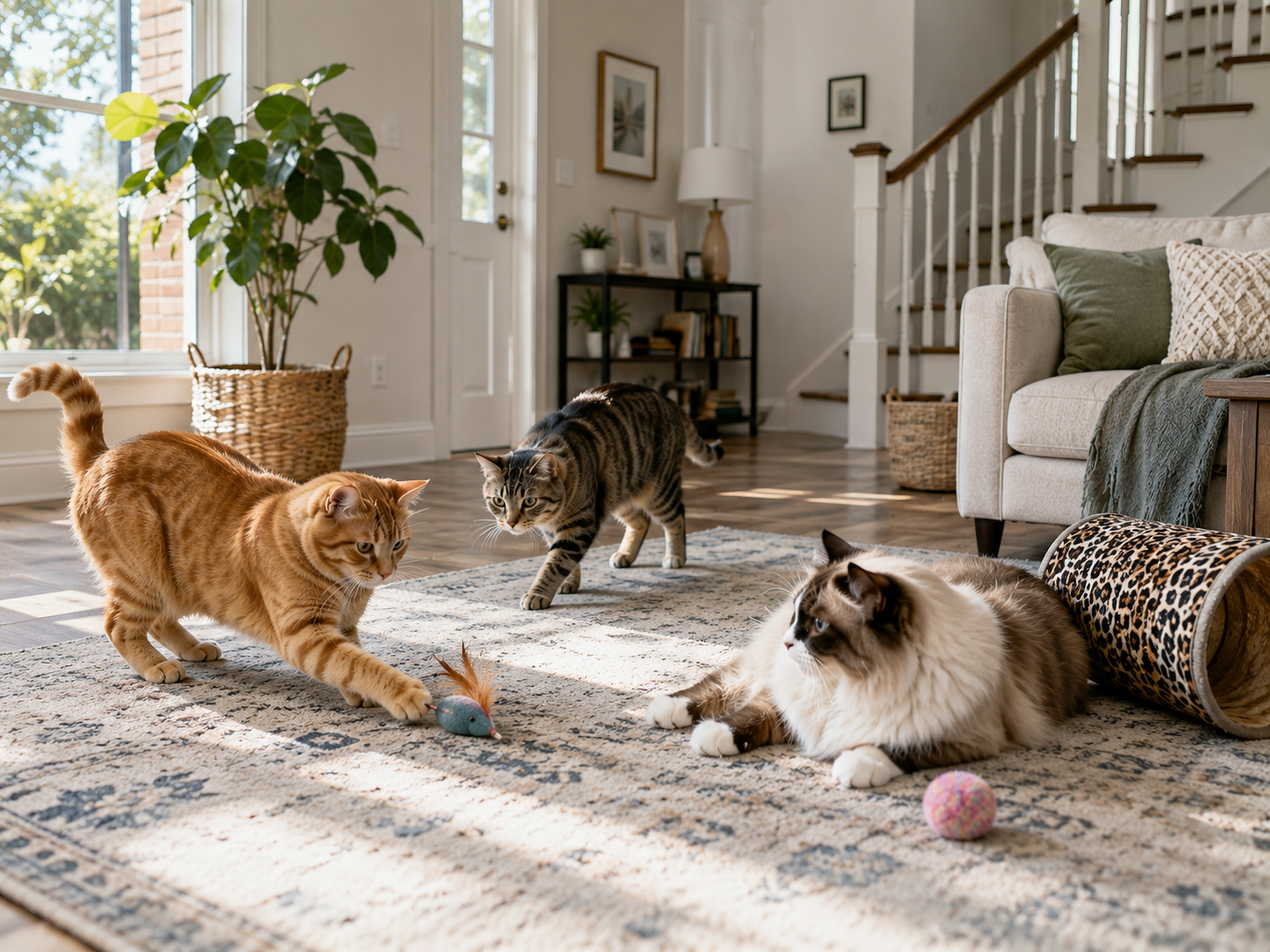
Cats are natural hunters with strong instincts to stalk, chase, jump, climb, and observe. Owners can support these behaviors by scheduling two or three short play sessions each day. Each session can last around ten to fifteen minutes. Wand toys, rolling balls, track toys, and food puzzles can imitate different stages of hunting and encourage cats to move.
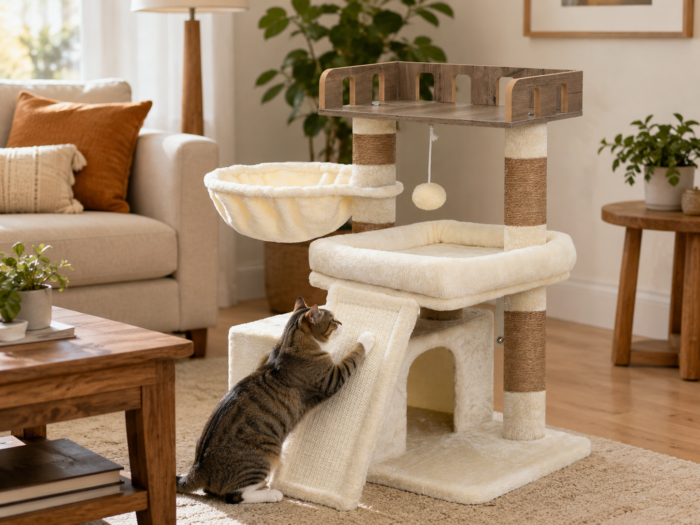
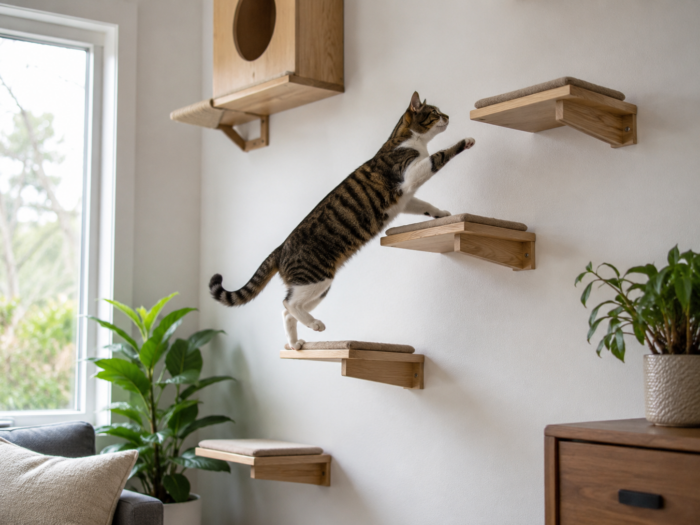
Vertical space is also important for indoor cats. Cat trees, window perches, climbing shelves, and scratching posts can expand a cat’s usable territory without requiring additional floor space. Platforms at different heights allow cats to climb, rest, observe, and move through the room more naturally.
The right cat furniture should match the cat’s age, size, and mobility. Young and active cats may enjoy tall structures with multiple climbing routes. Larger cats need wider platforms, strong posts, and stable bases. Senior cats, short-legged breeds, and cats with reduced mobility may benefit from smaller distances between platforms, ramps, or step-like layouts.
Exercise does not need to happen in one long session. Short and consistent activities are often more suitable for cats. Playtime can be added before meals, after work, or before bedtime. By observing the cat’s response, owners can identify its preferred toys, activity level, and play schedule.
A healthy indoor home should offer more than food and shelter. It should give cats opportunities to climb, scratch, explore, hide, play, and rest. Regular exercise can support weight management, muscle strength, emotional well-being, and a stronger relationship between cats and their owners.